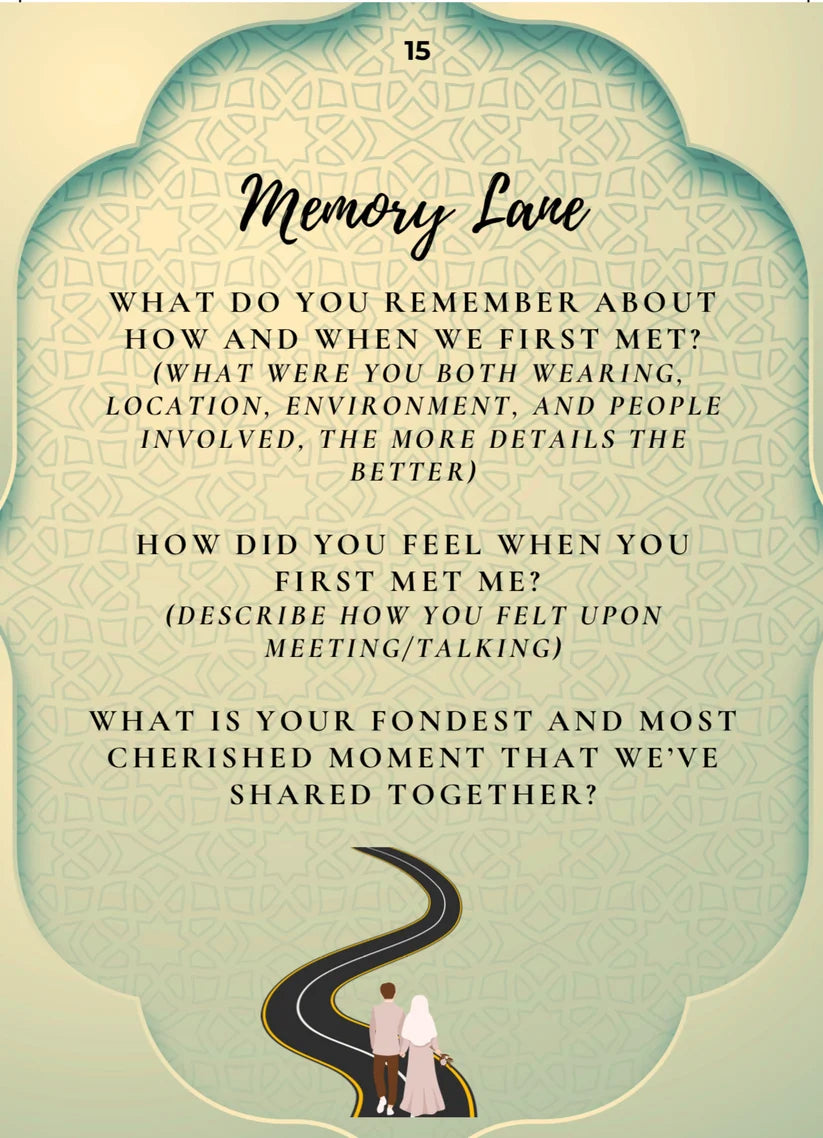
Memory Lane
Enlarge card ↗Remember how you first met, what drew you to each other and the moments you still cherish.
 Explore the deck ↗
The Muslim marriage conversation cards
An interactive deck of Muslim marriage conversation cards, rooted in Islamic teachings and marital counseling concepts. Created to help couples start talkin’ about the things that matter.
Created by a Licensed Professional Counselorand National Certified Counselor
Compassion and mercy
And one of His signs is that He created for you spouses from among yourselves so that you may find comfort in them. And He has placed between you compassion and mercy. Surely in this are signs for people who reflect.
Surah Ar Rum · 30:21
Why Qalb to Qalb exists
“Do you have any Islamic marital resources for us?”
A question Muslim couples repeatedly asked Natasha in her counseling practice.
That question is where this deck began.
Natasha wanted a resource couples could reach for after a long day at work or on a weekend together. Something interactive, with room to talk about their relationship and return to their Deen.
The topics come from questions and concerns she encountered while working with Muslim couples: communication, vulnerability, Islamic responsibilities, empathy and understanding a spouse’s needs.
Qalb to Qalb brings those conversations into a deck you can use at home, at your own pace.
Read the story behind the cards ↗Read the cards for yourself
Some cards ask a question. Others offer an exercise, a reminder or an action to try. These are photographs of cards from the deck. Tap to read them at full size.
Remember how you first met, what drew you to each other and the moments you still cherish.
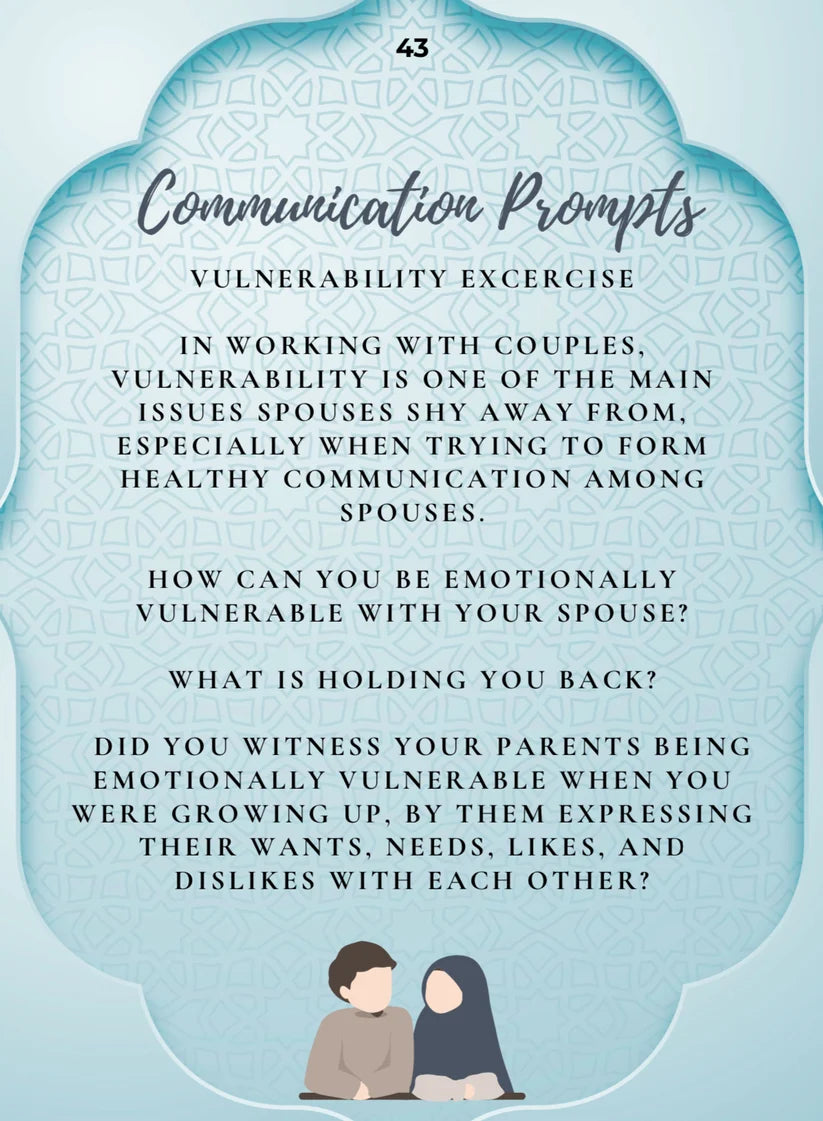
Explore vulnerability and what makes it easier or harder to express feelings.
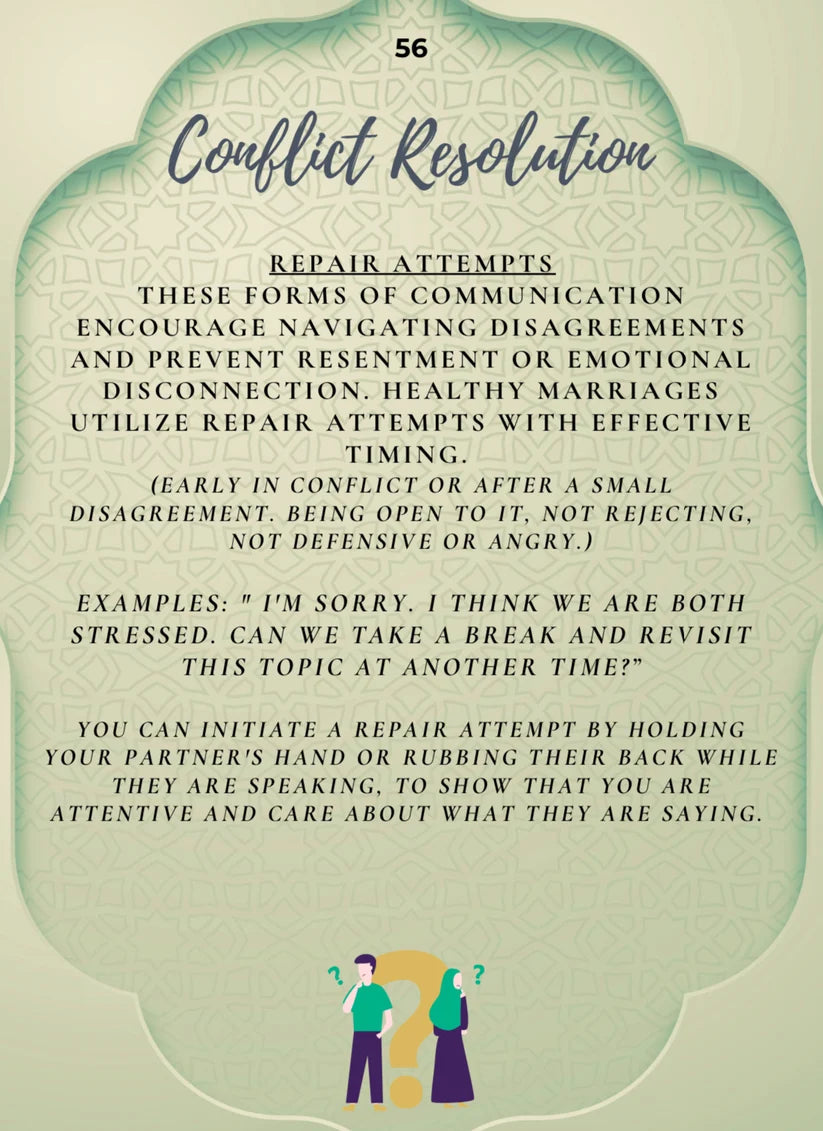
Practice listening, taking a break when needed and returning to a disagreement with respect.
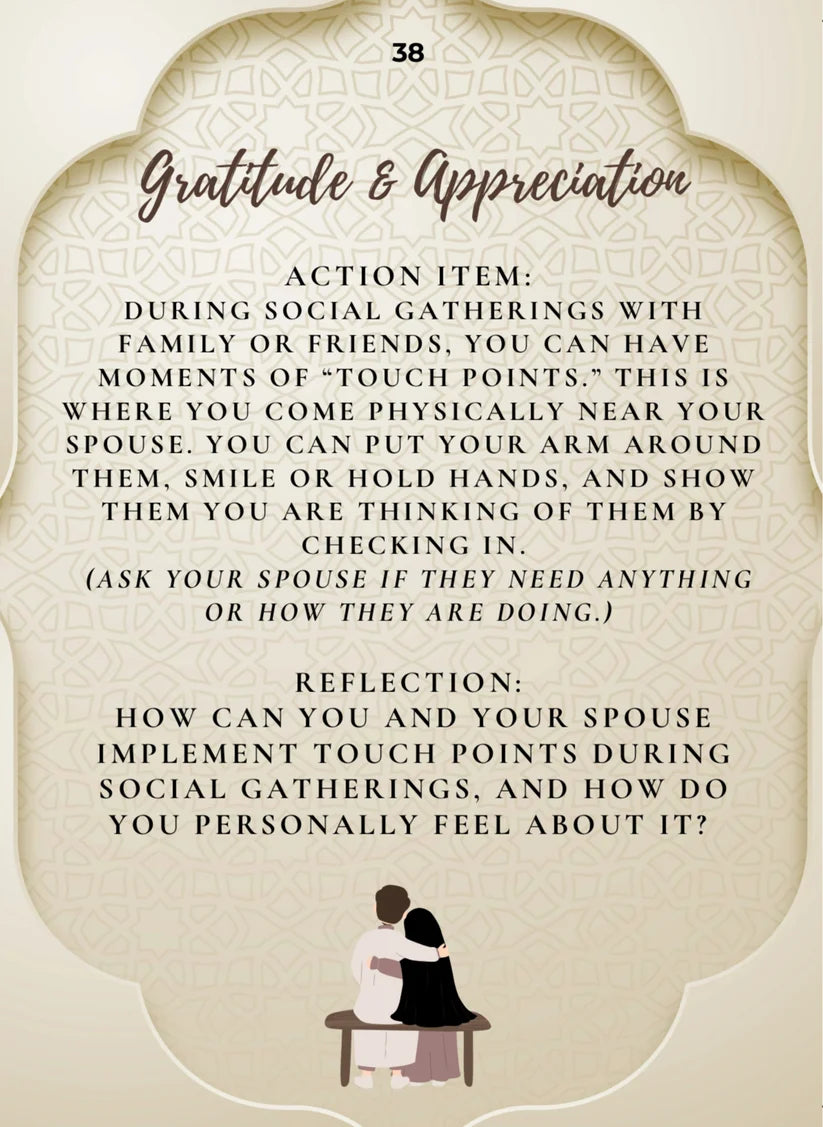
Notice what your spouse does and put your appreciation into words.
All 14 topics
Choose the topic that fits the conversation you want to have. Open each topic for a short overview.
Reflect on the Qalb, the Nafs and Islamic teachings about marriage.
Revisit shared memories and the early days of your relationship.
Explore closeness and intimacy within marriage. This topic is intended for married couples.
Talk about what you value in your spouse and ways to express it.
Reflect on feelings, vulnerability and how you communicate.
Discuss disagreements and ways to listen with respect.
Consider how your upbringing shapes the way you relate to each other.
Talk about family relationships, expectations and boundaries.
Choose ways to practice and grow in your Deen together.
Make room to discuss wellbeing and caring for yourselves.
Find ideas for spending time together as a married couple.
Keep learning about your spouse’s inner world.
Reflect on the habits you bring to your marriage.
Bring dua into your life together.
Faith belongs in the conversation
Our relationships do not sit apart from our Deen.
The deck brings Islamic principles into everyday conversations about responsibilities, emotional needs and the way spouses treat each other.
These sit alongside communication exercises and marital counseling concepts selected by Natasha from her work with couples.
Why these conversations matter
Conversations about marital difficulties and divorce are part of our community’s reality. Couples also need practical ways to discuss their concerns while honoring their faith.
The Family & Youth Institute’s resource on marital conflict highlights the need for support:
report at least one significant marital issue, according to the FYI summary.
are looking for community support, according to the same resource.
Source: The Family & Youth Institute, Marital Conflict and Road to Success. The resource draws on studies published from 2012 to 2020. These are historical research summaries, not a current national divorce rate or evidence of this deck’s effectiveness.
Reliable national data is limited. ISPU’s analysis of its 2020 poll does not support claims that Muslims have a higher divorce rate than the general public. The share of people currently divorced is also different from the share of marriages that eventually end in divorce. Read ISPU’s explanation.
Using your cards
Start with something you both feel comfortable discussing. A memory or a gratitude card can be a gentle place to begin.
Read the card and give each other time to respond. You can pause, skip a question or come back to it another day.
Keep a card on the wooden stand as a reminder, or choose another topic the next time you sit down together.
For different stages of your life
Learn more about each other, revisit familiar topics and make time for conversations that daily responsibilities can crowd out.
Use relevant cards for personal reflection and to consider questions you may want to ask a potential spouse. Choose topics appropriate to your stage. Intimacy cards are for married couples.
Give the deck for a nikah, an anniversary or to someone preparing for marriage. The box and wooden stand are included, with optional gift wrapping.
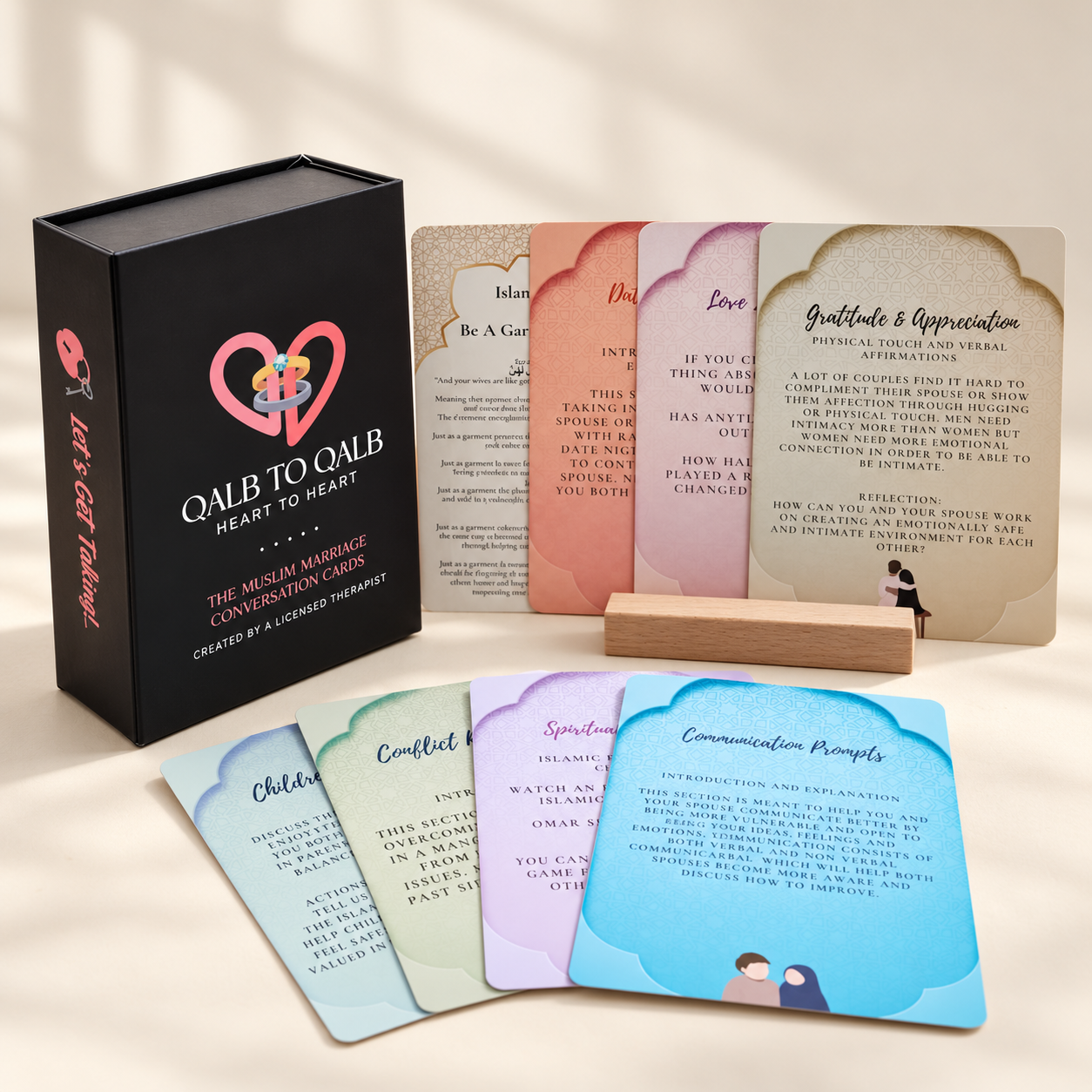
What comes in the box
$40.99 · Free U.S. shipping on the deck
Shop the Deck ↗Optional gift wrapping: $5. International delivery is calculated at checkout.
A few things you may be wondering
No. The original deck was created for couples at different stages of marriage, including newlyweds and those married for decades. You can use it simply to learn more about each other.
Its topics include Islamic Grounding Principles, Dua Cards and Spiritual Challenges, along with ayahs about marriage and Prophetic examples. These appear alongside practical relationship questions and exercises.
No. These cards are an educational conversation resource. They do not provide an assessment, treatment or a substitute for professional support when it is needed.
Yes. It can support reflection on values, expectations and questions for a potential spouse. Some cards are specifically for married couples, so the recipient should select topics that fit their stage.
Natasha Haroon Bandukda, a Licensed Professional Counselor and National Certified Counselor. Meet Natasha and read her story.
Qalb to Qalb · Heart to heart
Choose a card. Hear each other out. See where the conversation takes you.